
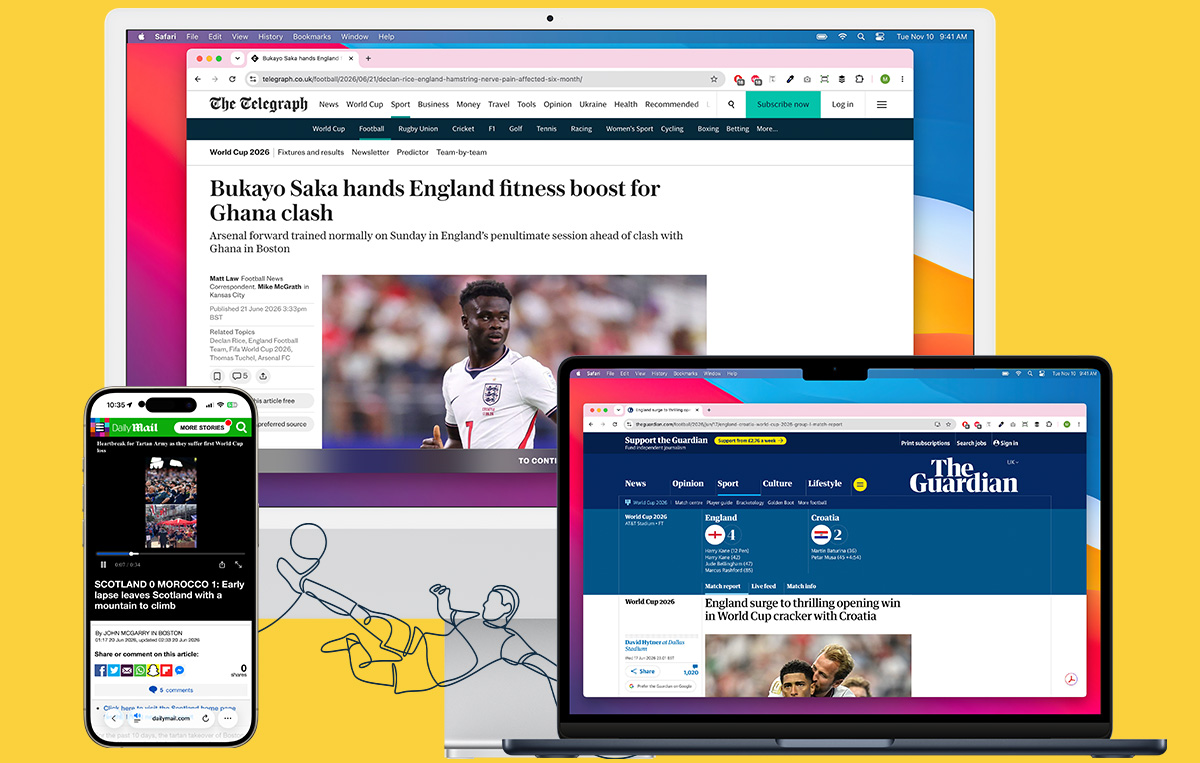
As the World Cup nears two weeks of footballing action, data from Ozone’s audience platform demonstrates that news brands’ central role in covering the tournament for millions of fans is consolidating
Between Monday 8 June and Sunday 21 June, digital news brands saw their weekly readership hit 9.4 million — up 14% compared to the previous two-week period. This growth constitutes more than one million extra weekly readers. With England and Scotland’s squad list announcements and the Champions League final all taking place in the fortnight before the World Cup started, the data proves news brands’ consistent place at the heart of Britain’s football fever.
This fever was encouraged by England’s electrifying opening match against Croatia on Wednesday 17 June, with live blogs and post-match analysis making the week’s most-read content. Match day itself saw a 42% day-on-day growth in readership, with audiences peaking at 83% higher during half-time and the second half versus the rest of the day. Page views on 17 June also saw a day-on-day increase of 39%.
England still holds the larger share of voice among football readers ahead of the Three Lions’ all-important game against Ghana on Tuesday. Manager Thomas Tuchel and star players Harry Kane, Marcus Rashford and Jude Bellingham all commanded fans’ attention this week. Meanwhile, concerns around Bukayo Saka’s fitness have boosted his share of voice, with an Achilles injury only allowing him to play 20 minutes off the bench against Croatia.
While many fans devour pre-match predictions ahead of England’s next group match, Scotland’s share of voice has also grown. A 1–0 defeat to Morocco has failed to dent the buzz among the Tartan Army, with readers’ attention most turned to manager Steve Clarke, plus captain Andy Robertson and Napoli midfielder Scott McTominay. Scotland is looking to make significant waves by felling five-time champions Brazil on Wednesday.
On Friday 19 June — the day of Scotland’s game against Morocco — readership peaked between 7–10am in anticipation for the match later that evening, with audiences 45–66% higher than the rest of the day. After audiences stabilised, they once again rose by 25% two hours before kick-off.
While time zone hopping tests the endurance of millions of football fans this World Cup, it’s clear that interest in the tournament continues to rise among news brand audiences. With the knockout stages beckoning both England and Scotland this week, it appears more readership spikes are to be expected.
Source: Ozone digital news brands